Banner image

Corporate Governance

Our Governance principles

Governance principles are essential for all companies. They provide a framework to manage a business responsibly.

The framework requires structures and processes designed to ensure a company’s accountability; transparency; compliance with the law; stability, investment and responsiveness to its stakeholders. However, the best governance principles can only be realised by the participation of the employees and business partners, and the company’s ability to empower them to perform their roles effectively.

A business has to take into account the needs and demands of its many stakeholders and Chesnara is no exception. Our main goal is to make sure the business runs effectively for the long-term benefit of our customers, shareholders, employees, regulators, outsourcing partners and local communities. To help our stakeholders navigate the governance framework, we use four key areas: Business Management, Data, Values and Standards, and Managing Money.

Underlying our governance principles is an ethos of Environment, Social and Governance (ESG). It’s a commitment to continue using a holistic lens for day-to-day management and in the development of our long-term plans. Not just in terms of how we run the company or our successes, but also the impact this may have on staff, communities and the environment.

At chesnara, we always manage our business in a responsible way and have a strong sense of acting in a fair manner, giving full regard to the relative interests of all stakeholders.

Motivated to deliver value for the benefit of all our stakeholders, our business ethos cultivates robust and consistent governance. Risk-taking and risk management form the foundation of our business model.

We work closely with our regulators and delegate responsibility to our business units. This not only ensures the delivery of our strategic plans, but also our readiness for future developments.
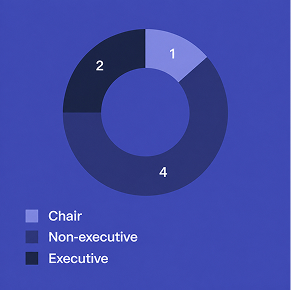
Block1

3

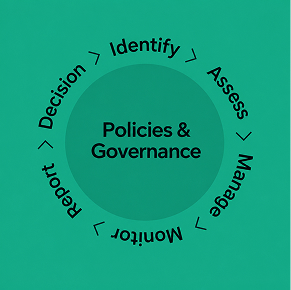
Lines of defence model with a single set of risk and governance principles
Policies and governance

Chesnara recognises the benefits of having diversity across all areas of the group. When considering the make-up of the Board, the benefits of diversity are appropriately reviewed and balanced where possible. This includes taking into account skills, sector experience, gender, race, disability, age, nationality and other contributions that individuals may make. In identifying suitable candidates, the Nominations & Governance Committee will look for candidates from a range of backgrounds, with the final decision being based on merit against the role criteria set.

Chesnara maintains a business continuity plan (BCP) that makes sure recovery and continuity of all critical services will be achieved within an acceptable time frame.

The plan is regularly reviewed and tested at least once a year.

The Group has no appetite for any critical business services being unavailable in each of its business units beyond what local management consider acceptable.

The Group undertakes appraisals each year of all staff, including the Senior Management Team. The appraisal framework involves assessing three key measures: Values, Risk and Audit. Although it extends beyond reviewing performance based on regulatory standards and setting goals. It also provides for professional and personal development opportunities, to help foster every individual’s potential with the support of specialist guidance and training.

Staff in the UK are expected to follow the FCA (Financial Conduct Authority) and PRA (Prudential Regulation Authority) conduct standards and Senior Management undergo Attestation every year and an SM&CR (Senior Managers and Certification Regime) Fitness and Propriety check every three years.

Chesnara has no tolerance for bribery and corruption. The Group’s activities, and those of its Directors and employees, are conducted to the highest standards of ethics and integrity.

The Gifts & Hospitality principle gives guidance on receiving and providing gifts & hospitality and the difference between a permitted and non-permitted benefit.

Our recruitment of all employees follows clear policies and procedures to make sure the individuals selected are suitable and their roles, responsibilities and reporting lines are clearly specified.

Induction, training and on-going professional development are given alongside on-going individual appraisal.

Our remuneration policies are designed to attract, motivate and retain high calibre individuals with the relevant skills and experience to contribute to the Group’s success. The Group’s approach to remuneration aims to promote sound, prudent and effective management of its business.

Governance and oversight is provided by a Board Remuneration Committee.

Succession planning is an important aspect of good governance, ensuring that Chesnara is fully prepared for planned or sudden departures from key positions throughout the group. The Nominations & Governance Committee reviews the succession plans for the Boards, the group executive committee and senior executives across the group. The plans take into account the challenges, opportunities and both strategic and commercial issues facing the Company in its markets.

Keeping data secure is an ongoing and growing concern for all companies. Robust and up-to-date processes and standards are necessary to quickly identify and deal with any potential breaches.

One primary area of risk relates to information security. Failure to protect all sensitive and personal data could arise from the failure of internal processes and standards. Such a breakdown would expose the company to potential malicious and targeted cyber attacks, designed to exploit vulnerabilities. For our business, this potential threat also extends to our third-party service providers.

Our focus is on ensuring that our internal processes and standards are current and sufficiently robust to limit any exposure and potential impact from IT and/or data security failures. To actively protect the interests of all our stakeholders, our processes are designed to help identify and deal with any potential breach as early as possible.

Chesnara maintains a business continuity plan (BCP) that makes sure recovery and continuity of all critical services will be achieved within an acceptable time frame.

The plan is regularly reviewed and tested at least once a year.

The Group has no appetite for any critical business services being unavailable in each of its business units beyond what local management consider acceptable.

Cyber risk means any risk of financial loss, disruption or reputational damage to customers or any part of the Group as a result of our information technology systems. This includes digital technologies, devices and media. Responsibility for cyber risk extends beyond the IT team and preventing any risk is a Group concern.

The Company has an Information Security Policy Framework that features policies on all topics relevant to protecting and keeping safe the Company and UK based employees’ information and IT assets. This includes the legal requirements of the General Data Protection Regulation (GDPR) and the Data Protection Act 2018, introduced in May 2018.

Personally identifiable information is only collected where it is specifically and knowingly provided. However, our web server does collect basic information, such as the visitor’s internet service provider's domain name and the pages accessed and when, during a visit to the site. This information is used to analyse the use of our website to help guide improvements.

The Group does not accept poor data quality as a reason for a material misstatement of financial or non-financial information to customers, shareholders, regulators or public bodies. The approach to data quality complies with all relevant regulation, including data sourced and managed both internally and through our Outsourced Service Providers.

The Company has an Information Security Policy Framework that features policies on all topics relevant to data security, protecting against any material loss of and/or unauthorised or illegal access to confidential personal or business data.

Chesnara adopts the 'three lines of defence' model across the group, taking into account size, nature and complexity, with a single set of risk and governance principles applied consistently across the business.

We aim to make a complicated industry as simple and transparent as possible. At the heart of our business is a robust governance framework, designed to minimise the risks involved in the day-to-day running of the business. We recognise that risk can never be eliminated, but by having the right balance of values, standards and controls, we can limit our exposure to it.

Our values and standards are shaped by our drive to deliver first-rate and fair outcomes to a range of key stakeholders, including our business units, policyholders, regulators, employees and investors.
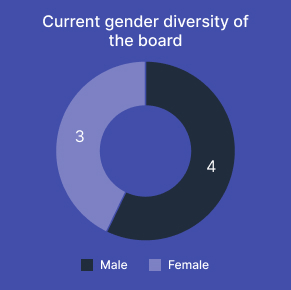
Current gender diversity of the board

0

Our tolerance rate to bribery and corruption

5

Committees to keep management in check

Chesnara has no tolerance for bribery, fraud or corruption. The controls in place include the:

  • maintenance and review of a Gifts & Hospitality Register
  • disallowance of any political contributions or inducements
  • careful consideration of any charitable donations
  • monitoring of company assets, accounts and statements.

Internal financial control acts as a further monitoring and prevention system.

Chesnara maintains a business continuity plan (BCP) that makes sure recovery and continuity of all critical services will be achieved within an acceptable time frame.

The plan is regularly reviewed and tested at least once a year.

The Group has no appetite for any critical business services being unavailable in each of its business units beyond what local management consider acceptable.

All communication is seen as important and effective communication plays a very positive role in the day-to-day operations of the Group.

The Group has policies and procedures for managing general, external and internal communications. They form part of the Group’s strategic and business planning and reflect the Chesnara’s brand identity and standards. The core aim is to provide timely, clear, transparent, accurate and objective information that meets the need of all our audiences, including our statutory responsibility to provide information.

The Group aims to be aware of and sensitive to the needs of the environments and the local communities across all business sites, our employees, investors and regulators. Our policies follow the relevant regulation and legislation, and support the Group’s efforts to improve our environmental performance.

Our people are our greatest asset. We recognise that to meet our own expectations in a competitive market, we need to continue attracting, promoting and retaining the best candidates. Our approach is to be open, entrepreneurial and inclusive in how we operate.

Chesnara is committed to a policy of equal opportunity in employment. We will continue to select, recruit, train and promote the best candidates available. Selection is based on suitability for the role and treats all employees and applicants fairly, regardless of race, age, gender, marital status, ethnic origin, religious beliefs, sexual orientation or disability. Chesnara will ensure that no employee suffers harassment or intimidation.

Chesnara places great importance on the health, safety and welfare of its employees. Relevant policies, standards and procedures are reviewed on a regular basis. This ensures that any hazards or material risks are removed or reduced to minimise or, where possible, exclude the possibility of accident or injury to employees or visitors.

An Internal Audit function exists within the Group’s business units in line with the nature, scale and complexity of each business.

Every unit has its own audit plan, which is used to examine and evaluate the appropriateness and effectiveness of systems, internal control mechanisms and arrangements.

The Modern Slavery Act 2015 (Slavery Act) requires a commercial organisation over a certain size to publish a slavery and human trafficking statement for each financial year. This statement can be found on the Chesnara plc website. Chesnara welcomes the act and is committed to the eradication of human trafficking and slavery. Slavery and human trafficking are abuses of a person’s freedom and rights. We are totally opposed to such abuses in our direct operations, our indirect operations and our supply chain as a whole.

Chesnara has in place whistle-blowing policies, which comply with local regulatory requirements. In the UK, the Audit & Risk Committee Chairman is appointed as Whistle-blowing Champion.

It is essential to have a well designed and effective governance framework to ensure that stakeholders' investments are safeguarded.

We believe financial stability is key to treating customers fairly. Effective capital management underpins all of our cultural and strategic objectives across the group and both divisional and business unit levels.

As a public company, it’s crucial for us to be considered an attractive investment. Most of our investors are institutional and hold our shares in their income funds and so our aim is to deliver an attractive and sustainable dividend. Although that’s not the whole story. A ‘low maintenance’ investment, offering clarity and consistent performance, is in itself an attractive proposition for many investors. And one that strives to generate an increasingly meaningful level of new business profitability by constantly improving our commerciality.

6 %

dividend growth in the interim 2026 dividend

185 %

Group Solvency Coverage Ratio​

£ 976 m

Own Funds

Chesnara is required to provide a range of financial reports as prescribed by the Companies Act 2006, Listing Rules, Disclosure and Transparency Directive and the UK Corporate Governance Code. The Company has a Reporting and Disclosure Policy outlining the reporting and disclosure requirements, including those of Solvency II and the International Financial Reporting Standards (IFRS).

All Group companies comply with all relevant statutory and regulatory requirements to prevent Money Laundering activities. Each division has an Anti-Money Laundering Policy signed off by their Board, which includes a clear allocation of responsibility and accountability for Money Laundering controls and audit trail.

The group aims to make profits by running insurance businesses rather than through investment in the market. Managing these insurance businesses and any surplus funds sees the application of an investment strategy underpinned by appropriate principles.

The Group aims to minimise the risk of not being able to meet its outgoings, be it to policyholders or other creditors. To meet this risk appetite, minimum levels of liquid assets are established across the group and must be adhered to.

The Group outsources business services and support activities when appropriate. The relevant Board is regularly updated on supplier performance in material contracts.

A core outsourcing principle is the selection criteria for outsourcing business. Selection is based on financial standing and management and evidence of controls designed to minimise the impact of an outsource provider failing to meet its obligations or quality service standard.

When considering the financial position of the company, any appropriate allowance is required for likely cost of future payments to policyholders and for the costs of running the business, leading to the holding of reserves. The nature of insurance means these future costs have an inherent uncertainty within them, so the Group considers it important that suitable governance and controls are applied to these assessments, ensuring that all regulatory considerations are applied, group principles and practices followed, and appropriate oversight applied to challenge the resultant valuations.

Each regulated entity will have a suitably experienced actuary responsible for advising the relevant Board, which takes appropriate responsibility for the assumptions and methodology used.

The Company’s Finance Function is responsible for overseeing the valuation of the assets and liabilities held by Chesnara as outlined in the Assets and Liabilities Valuation Policy.

This policy addresses the requirements of:

  • Directive 2009/138/EC (articles 41, 46 and 75)
  • Delegated Acts (article 267)
  • EIOPA 14-253 Final report on Governance (guidelines 52 to 59).

It provides a summary of the bases, methods and inputs used in asset and liability valuation for IFRS and Solvency II reporting, including assumptions and judgements concerning tax liabilities.

For solvency valuation purposes, the Group is required to value its assets at their market value. The vast majority of these assets are traded on stock exchanges and therefore the market value is determined with reference to quoted prices. For the minority of assets that are not traded on exchanges, the group uses valuation models that use inputs that can be observed in the market, for example longer term interest rates.

Our sustainability approach

Our sustainability governance framework

We operate a well-established, robust Governance Framework which underpins everything we do. This framework allows us to respond to the needs of our stakeholders and evolving market conditions.

How we deliver growth

Business units feed climate-related matters into the Group governance structure via GSC reporting, business reviews, risk reporting and local business plans.

Sustainability is embedded into succession planning, recruitment and the Chesnara Board skills matrix to ensure appropriate oversight of climate-related matters.

Tabbed feature dummy image

Chesnara board

Meets at least quarterly

The Board defines the Group's strategic aims, ensures that the necessary resources and structures are in place and sets the targets to review management performance. The Board benefits from regular sustainability reporting covering environmental, social and governance matters.

Learn more
Audit & Risk Committee

Audit & Risk Committee

Meets at least quarterly

The role of the GA&RC includes reviewing and monitoring the current and potential risk exposures, including the monitoring of climate-related risk exposures across the Group and how such risks are treated. The GA&RC reviews external reporting, including with regards to climate-related risks and opportunities.

Learn more
Tabbed feature dummy image

Nomination & Governance Committee

Meets a minimum of three times a year

The Nomination & Governance Committee plays a key role in ensuring that the composition of the Board and its subsidiaries is appropriate and that members have the necessary skills, knowledge and experience to discharge their duties effectively, including with regards to climate change. It is also responsible for reviewing the Group's governance practices and procedures to ensure they remain appropriate and reflect best practice.

Learn more
Tabbed feature dummy image

Remuneration Committee

Meets a minimum of three times a year

The role of the Remuneration Committee is to ensure that the Remuneration Policy promotes, encourages and drives long-term growth of shareholder value, of which climate change is a key consideration.

Learn more
Tabbed feature dummy image

Group Sustainability Committee

Meets at least quarterly

The GSC interacts with the Board and the committees above and below in the following ways:

  • With the Board on the sustainability strategy and embedding it into the overall Group strategy.
  • With the GA&RC on ESG risks and external disclosures, including TCFD.
  • With the Nomination & Governance Committee on matters regarding Board composition and sustainability-related skills, knowledge and experience of the Board and Board committees.
  • With the Remuneration Committee on trends in which management is and should be incentivised on ESG factors.
  • With the GIC on investment-related matters, including the transition plan to net zero.
  • With the SLT and divisional Executive Committees to facilitate all of the above.
Learn more

Group executive committees

These committees report to our CEO. They support the Group CEO with day-to-day management of the Group and on investment-related matters.

Senior LeadErship Team

Senior Leadership Team

Meets monthly

The SLT is in place to challenge and support the Group CEO. It supports the identification and review of risks impacting the Group, including any material variations in the impact of climate change upon the Group, as well as the monitoring of risk appetite compliance. It also supports oversight of the sustainability programme.

Group Investment committee

Group Investment committee

Meets quarterly

The GIC is in place to challenge and support the Group CEO. The GIC Terms of Reference specifically include consideration of ESG factors, including overseeing the asset managers' approach to ESG and climate change related matters.

Explore more

About us

Our strategic objectives

Our governance principles